Material changes volume from the cut to the truck to the fill. Here’s what to check in the geotech and the spec before you lock import, export and haul.
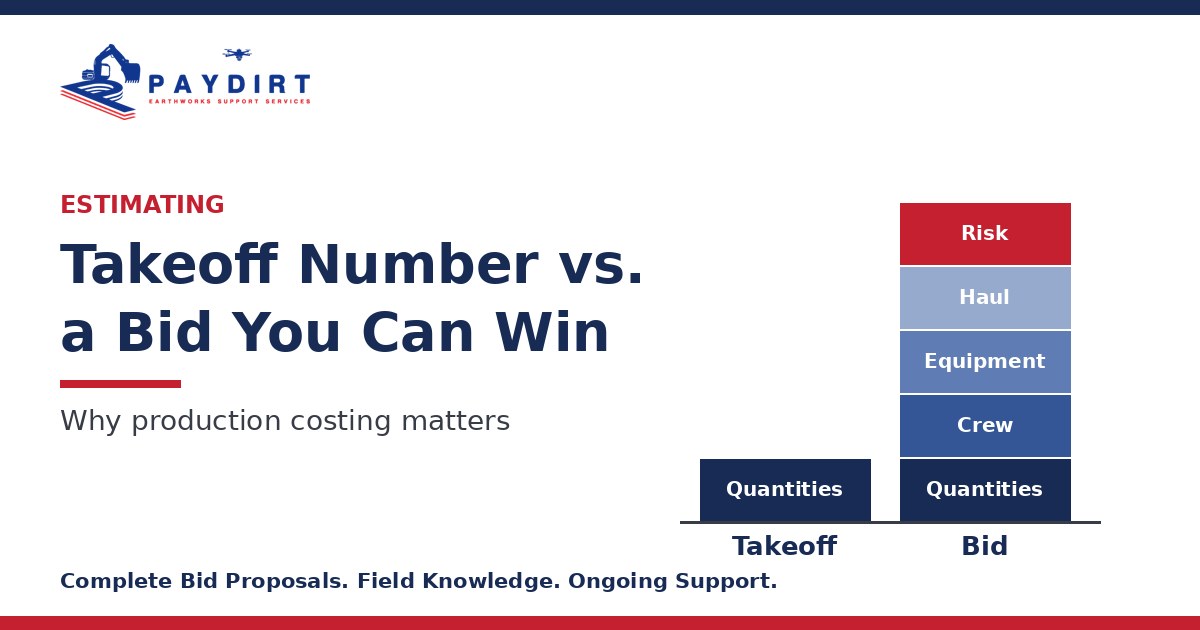
A takeoff tells you how much dirt. Production costing tells you what it costs to move it. Two contractors can start with the same quantities and end up with very different bids, because the price depends on how the work actually gets done: which machines, how many trucks, how far the haul, how fast the crew can produce. Here’s how to turn quantities into a bid you can win. Pricing a job now? Send us your plans.
Your takeoff gives you cut, fill, stripping, undercut and import or export. Those numbers matter, but a cubic yard of excavation on one site can cost far more than on another. Access, soils, haul distance and phasing all change the cost of the same yard. Treat the takeoff as the foundation of the estimate, not the estimate itself.
That’s why a bid built by multiplying quantities by a single unit price can miss in both directions. Price too high and you lose the job. Price too low and you win a job that loses money. The goal of excavation production costing is to price the work the way it will actually be built on this site.
Start with where the dirt goes. A balanced site that moves material a short distance is a very different job from one that needs import from offsite or export to a dump. Use the cut and fill balance to plan the mass haul: where you cut, where you fill, and how far material travels. Haul distance drives your fleet size and cycle times, so it shapes the whole production estimate.
Look at haul roads too. Steep grades, soft ground and long routes around obstacles slow trucks down and add cost even when the straight-line distance is short.
The right spread depends on the work. Mass excavation, fine grading, trenching and loading trucks all call for different machines. Match equipment to the quantities and the site conditions, then price each piece for the time it will actually be on the job. Oversizing the spread costs money every hour. Undersizing it slows production and stretches the schedule.
Think about the whole spread working together. Excavators, dozers, compactors and trucks need to be balanced, so one machine isn’t sitting idle waiting on another. Where the job uses 3D GPS machine control, factor in the model and the setup so the field crew can grade to design with fewer stakes and less rework.
Production rates turn quantities into hours. Estimate how many yards per hour each operation can realistically produce on this site, then size the crew and the fleet to match. Be honest about the conditions: tight access, wet soils or a busy site will slow things down. A production estimate built on realistic rates is what separates a bid that makes money from one that only looks competitive.
Don’t forget the time that isn’t moving dirt: mobilization, setup, weather, testing and waiting on other trades. Those hours still cost money, and they belong in the estimate.
The geotech report changes how material digs, loads and places. Rock, clay, saturated soils and unsuitable material each affect production, equipment choice and compaction effort. Read the boring logs and recommendations, and build their effects into your rates instead of assuming average conditions.
How the job is sequenced affects cost. Phased construction, limited access points, work around existing buildings or traffic, and erosion control requirements can all force extra moves, smaller equipment or more mobilizations. Walk through the phasing plan and price the job the way it will really be built.
Trucking and disposal can be one of the biggest lines in an excavation bid. Price the real cost of hauling: the distance, the number of trucks, dump fees and the cost of approved fill if you need it. Confirm local sources and sites before bid day so the numbers hold up.
Topsoil is part of this too. Decide whether it is stockpiled on site and respread, or hauled off, and price the handling either way.
Every site has unknowns. Unsuitable soils, groundwater, rock and plan conflicts can all change the cost after award. Identify the risks you can see, decide how to price them, and spell out what’s included and excluded in your clarifications. A clear proposal protects your margin and shows the owner you understand the job.
Bring it together: quantities from the takeoff, production rates, equipment, crew, haul, risk and clarifications, organized into a complete bid proposal. Paydirt builds that package for excavation and civil contractors, with US-based project management and QC on every estimate, backed by our dedicated production team, and 3 sets of eyes on every project before it reaches your desk.
When you review an estimate before bid day, you should be able to see the quantities it started from, the production rates it assumes, the equipment and crew it carries, how the haul is priced, and the risks it covers or excludes. If you can’t trace a number back to those pieces, it’s hard to defend on bid day or manage after award.
A takeoff number tells you what’s on the plans. A production estimate tells you what it will take to build it. That’s the difference between a number and a bid you can win.
Send us your plans through our work order request form (https://paydirtsupport.com/work-order-request-form/), or call 843-900-1002.
Paydirt: Complete Bid Proposals. Field Knowledge. Ongoing Support.
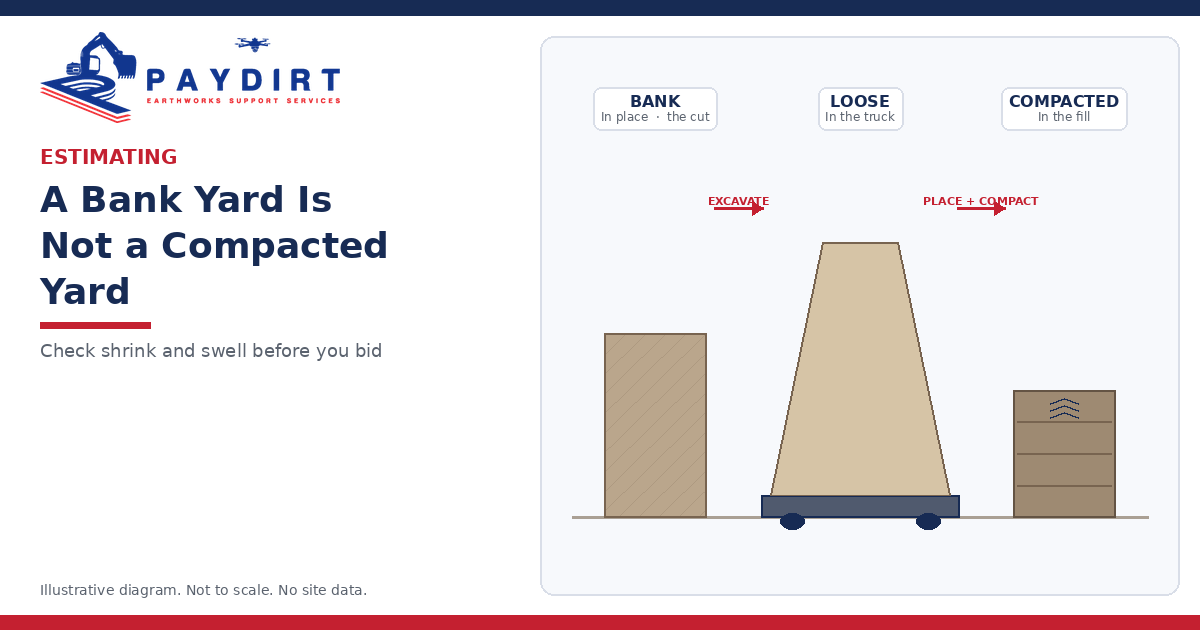
Material changes volume from the cut to the truck to the fill. Here’s what to check in the geotech and the spec before you lock import, export and haul.
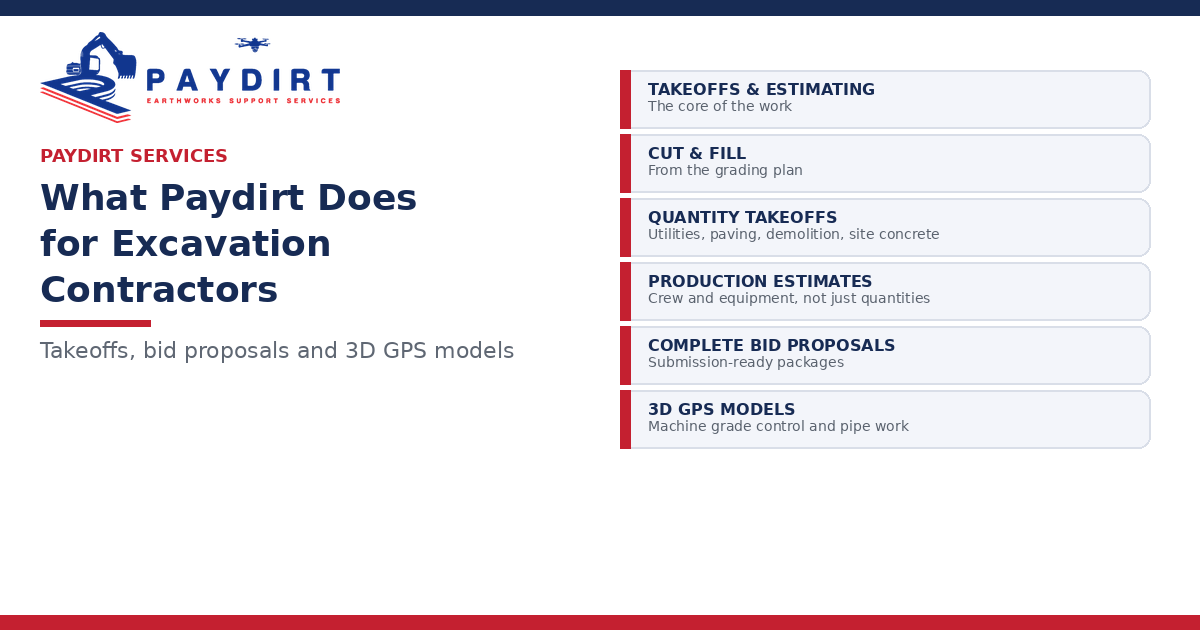
A clear look at what Paydirt does: takeoffs and estimating, production estimates, complete bid proposals and 3D GPS machine control models — with 3 sets of eyes on every project.
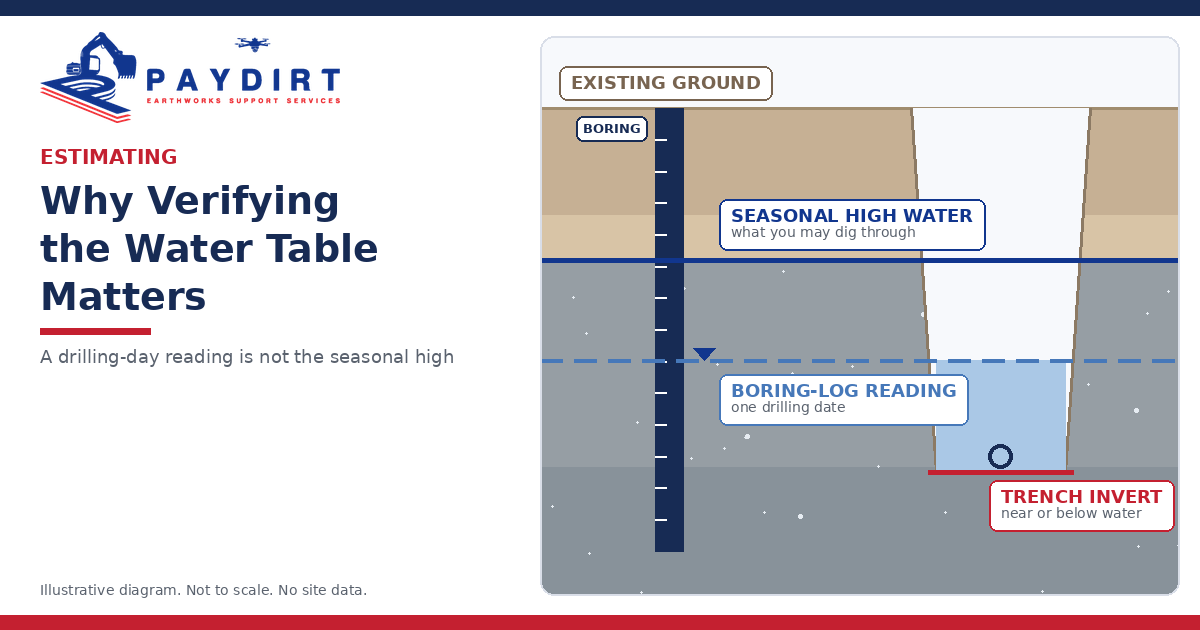
A water level recorded on one drilling date is not the same as the high water you’ll dig through. Here’s what to check before you lock the number.
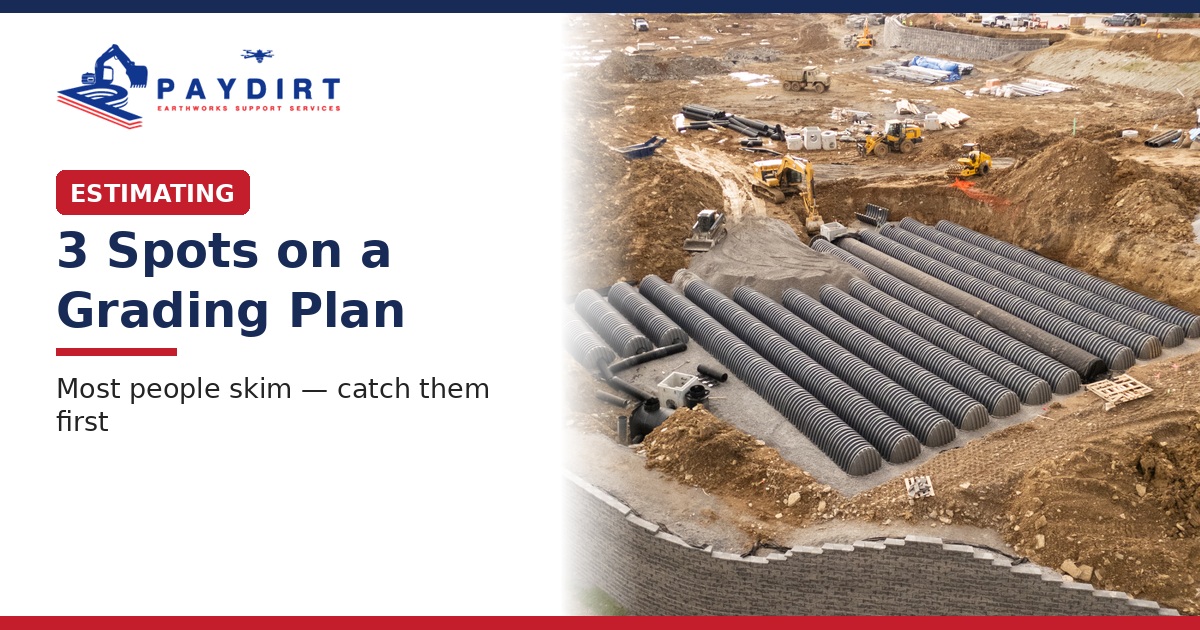
Most cut/fill misses hide in three spots on the grading plan: contours, spot elevations and margin notes. A five-minute desk check before you lock the number.
A takeoff tells you how much dirt. Production costing tells you what it costs to move it. Here’s how to turn excavation quantities into a bid you can win.